Moles, checked
properly.
Almost everyone has them. The ones worth watching are the ones that change, and a trained eye is the difference between reassurance and a missed melanoma.
Common, usually harmless, and worth keeping an eye on.
Moles are common. Almost every adult has a few, and adults who have light skin often have more, sometimes 10 to 40. This is normal, and you should not be overly worried about your moles.
But you should know that melanoma, a type of skin cancer, can grow in or near a mole. The first sign of melanoma is often a change to a mole, or a new mole on your skin. Caught early and treated, melanoma can be cured.
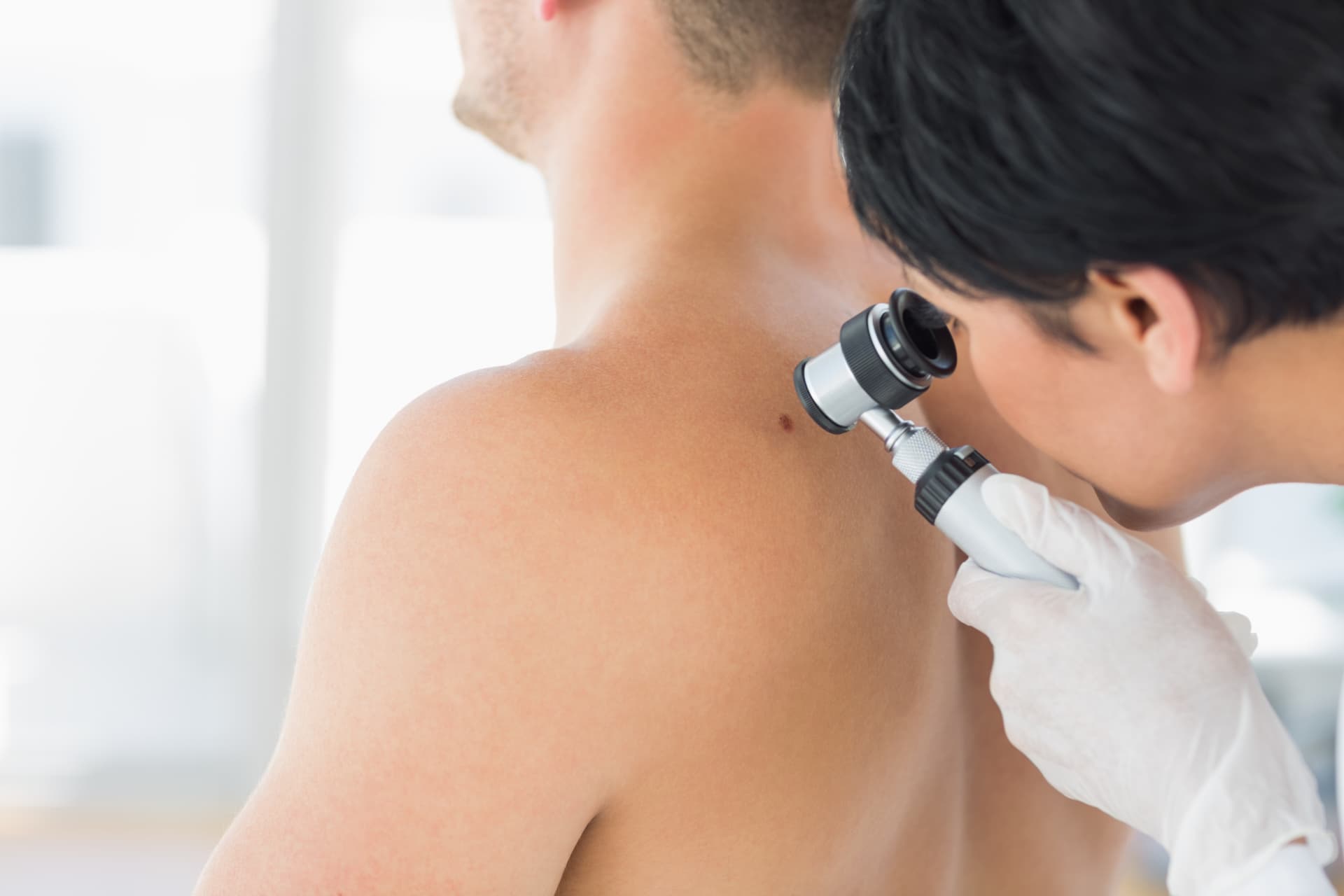
Checking your skin can help you find melanoma early. A dermatologist can show you how to examine your skin and tell you how often you should check it. If a mole starts to grow, itch or bleed, make an appointment.
The ABCDEs worth knowing by heart.
Any mole that meets one of these descriptions deserves an appointment with a dermatologist.
Asymmetry
One half of the mole does not match the other half in shape or color.
Border
Edges are irregular, ragged, notched or blurred rather than clean and round.
Color
Shades of brown, black, red, white or blue within a single mole, instead of one even tone.
Diameter
Larger than a pencil eraser, roughly 6 millimeters, though melanoma can be smaller.
Evolving
Any change in size, shape or color, or a mole that starts to itch or bleed.
Atypical moles
Melanoma can grow in an atypical mole. Anyone who has atypical moles should watch them for change.
Not sure where to start? Start with a visit.
Never shave a mole off at home.
Most moles do not require treatment. A dermatologist will remove a mole that bothers a patient (rubs against clothing, for example), that a patient finds unattractive, or that could be skin cancer. Removal happens during an office visit; a few moles require a second visit.
Surgical excision cuts out the entire mole and the skin is stitched closed. A surgical shave uses a surgical blade to remove the mole. If skin cancer is suspected, the mole is examined under a microscope. This is called a biopsy.
Never try to shave off a mole at home. If the mole contains skin cancer, some cancer cells can stay in the skin and even spread. You can also scar your skin or cause an infection.
Examine
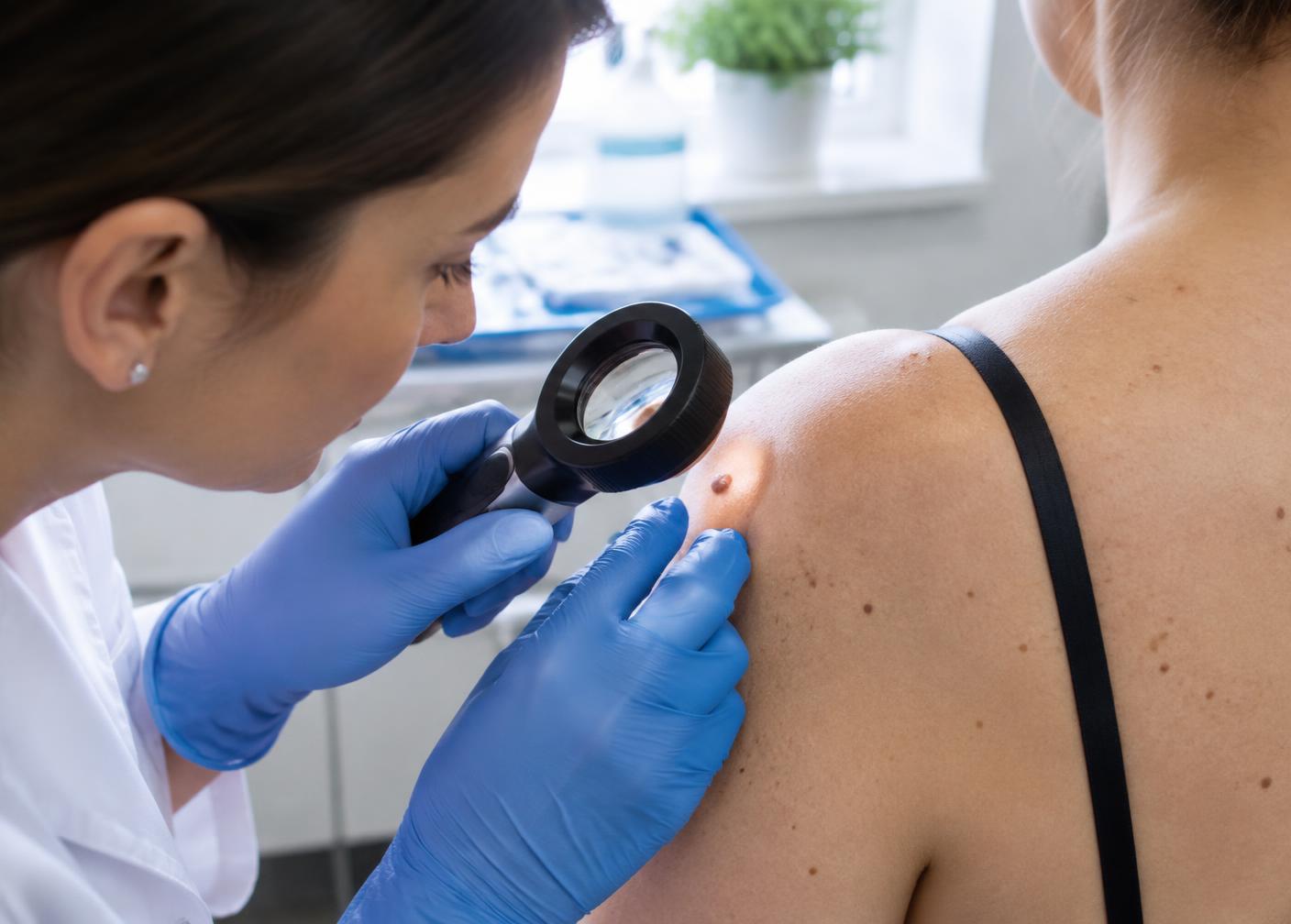
A dermatologist's trained eye can often tell whether a spot is a mole.
Remove
Surgical excision or surgical shave, during an office visit.
Analyze
Suspicious moles are examined under the microscope in our dermatopathology lab.
Follow up
If a removed mole grows back, make another appointment right away.
What is normal as kids grow.
Usually nothing to worry about
- Moles on a young child's skin are generally nothing to worry about.
- New moles appearing during childhood and adolescence is normal.
- Moles will grow as the child grows.
- Some moles darken and others lighten; this is seldom a sign of melanoma.
Book an appointment if
- A mole starts to grow, itch or bleed.
- A new mole appears on your skin as an adult.
- A removed mole grows back at the same site.
- A mole bothers you or you would like it removed.
Skin checks done right
- Experienced dermatology providers at every office.
- Biopsies read in our own in-house dermatopathology laboratory.
- Mohs surgery available when skin cancer is confirmed.
- Seven Hampton Roads locations, serving the community since 1946.
Answers are one call or one visit away.
Caught early, melanoma can be cured.
After a mole is removed, the skin will heal.
If the mole grows back, immediately make another appointment to see your dermatologist. This can be a sign of melanoma, a type of skin cancer.
Medical Dermatology
Board-certified dermatologists treating the full range of skin, hair and nail conditions across seven Hampton Roads locations.
View all medical servicesSchedule with the practice Hampton Roads has trusted since 1946.
To book your skin check with one of our medical providers, call (757) 622-6315 or schedule an appointment online.
Wherever you are in Hampton Roads, we're close.
From Norfolk to Williamsburg, seven offices, each staffed with board-certified dermatologists and supported by an in-house dermatopathology lab.
Schedule with the practice generations of Hampton Roads families have trusted since 1946.
Book online in under a minute, or call the office nearest you. New patients welcome.