Rosacea, brought
back under control.
A common skin disease that often begins with a tendency to blush or flush more easily than other people. Left untreated, rosacea can get worse.
It starts with a flush, and it can spread.
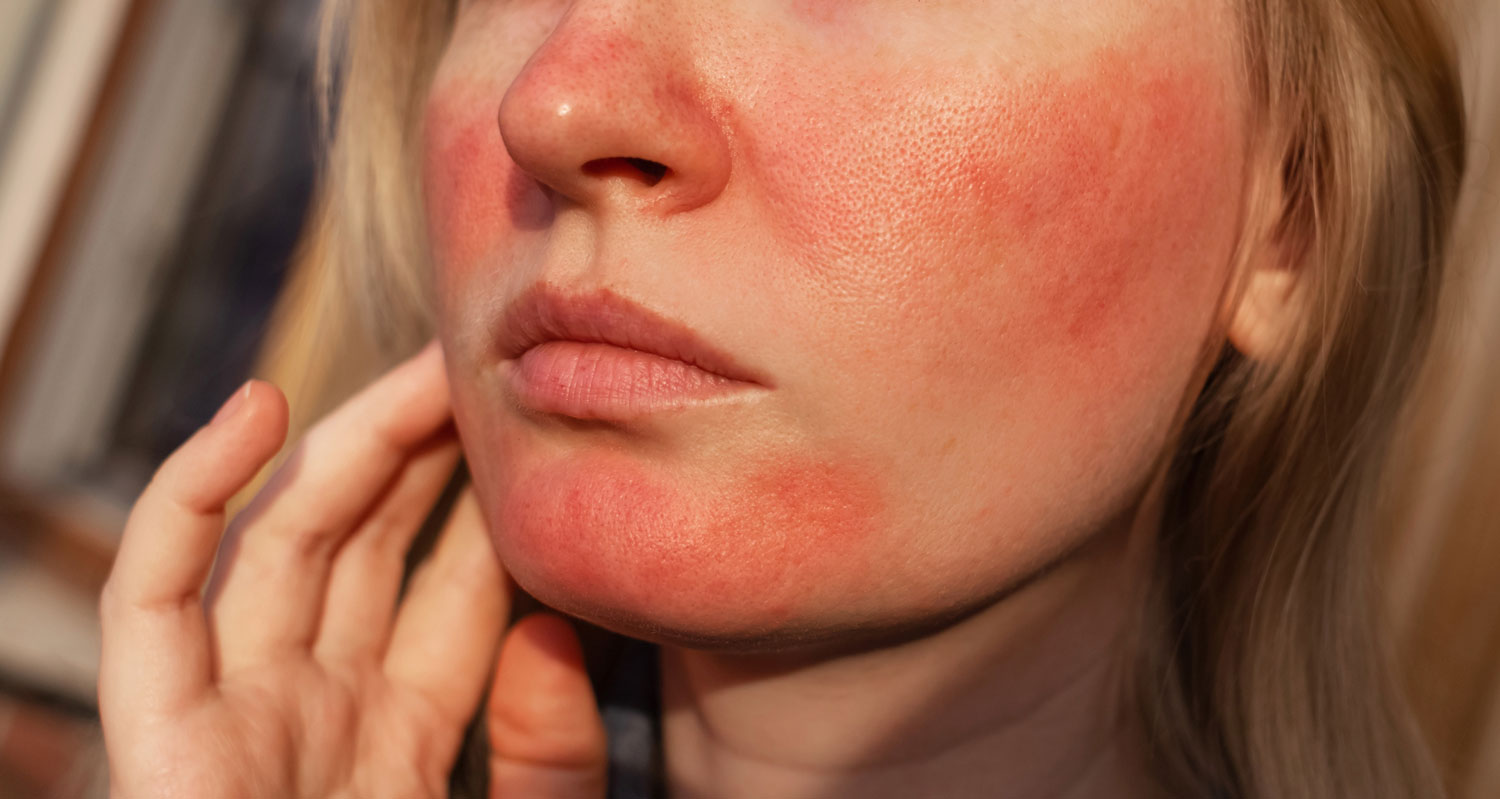
Rosacea (rose-AY-sha) is a common skin disease. It often begins with a tendency to blush or flush more easily than other people.
The redness can slowly spread beyond the nose and cheeks to the forehead and chin. Even the ears, chest and back can be red all the time.
With time, people who have rosacea often see permanent redness in the center of their face, which is why early treatment matters.
Four subtypes, because rosacea is more than redness.
There are so many signs and symptoms that rosacea is divided into four subtypes, and different signs need different treatment.
Erythematotelangiectatic
Redness, flushing and visible blood vessels, most often across the nose and cheeks.
Papulopustular
Redness and swelling with acne-like breakouts, often mistaken for adult acne.
Phymatous
Skin thickens and takes on a bumpy texture, most commonly on the nose.
Ocular
Eyes are red and irritated, eyelids can be swollen, and the person may have what looks like a sty.
Not sure where to start? Start with a visit.
Treat every sign, not just the redness.
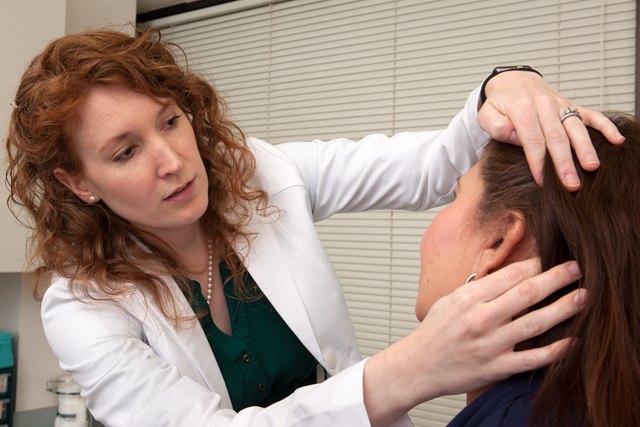
To diagnose rosacea, a dermatologist examines the skin and eyes and asks a series of questions about your history and triggers.
To treat rosacea, a dermatologist first finds all of the patient's signs and symptoms. This is crucial, because different signs and symptoms need different treatment.
Treatment for the skin includes medicine applied to the rosacea, daily sunscreen to help prevent flare-ups, an emollient to help repair the skin, lasers and other light treatments, and antibiotics applied to the skin or taken as pills. Thickening skin on the nose and other parts of the face can be removed with lasers, dermabrasion or electrocautery. When rosacea affects the eyes, your dermatologist may give instructions for washing the eyelids several times a day along with a prescription eye medicine.
Examine
The dermatologist examines both the skin and the eyes and reviews your history.
Identify
Every sign and symptom is catalogued, since each subtype needs different therapy.
Treat
Topicals, antibiotics, emollients, sunscreen, and laser or light treatments.
Maintain
Learn your triggers, avoid them, and follow a rosacea skin-care plan.
Matched to where rosacea shows up.
Redness and breakouts
- Medicine that is applied directly to the rosacea.
- Sunscreen worn every day to help prevent flare-ups.
- An emollient to help repair the skin barrier.
- Lasers and other light treatments.
- Antibiotics, applied to the skin or taken as pills.
Phymatous changes
- Lasers to reshape and resurface thickened skin.
- Dermabrasion, a procedure that removes the outer skin.
- Electrocautery, which sends electric current into the skin to treat it.
- Ongoing monitoring so changes are addressed before they progress.
Ocular rosacea
- Instructions for washing the eyelids several times a day.
- A prescription for eye medicine.
- Coordination with your eye doctor when symptoms are severe.
- Attention to triggers that worsen eye irritation.
To get the best results, people with rosacea should also learn what triggers their rosacea, try to avoid those triggers, and follow a rosacea skin-care plan.
Answers are one call or one visit away.
There's no cure, but treatment changes the course.
People often have rosacea for years. In one study, researchers asked 48 people who had seen a dermatologist about their rosacea: more than half (52 percent) had rosacea that came and went, for an average of 13 years. The rest (48 percent) had seen their rosacea clear, after an average of 9 years.
Some people have flare-ups for life. Treatment can prevent rosacea from getting worse, and can also reduce the acne-like breakouts, the redness, and the number of flare-ups.
Medical Dermatology
Board-certified dermatologists treating the full range of skin, hair and nail conditions across seven Hampton Roads locations.
View all medical servicesSchedule with the practice Hampton Roads has trusted since 1946.
Call (757) 622-6315 or schedule an appointment online to have your rosacea evaluated by a board-certified dermatologist.
Wherever you are in Hampton Roads, we're close.
From Norfolk to Williamsburg, seven offices, each staffed with board-certified dermatologists and supported by an in-house dermatopathology lab.
Schedule with the practice generations of Hampton Roads families have trusted since 1946.
Book online in under a minute, or call the office nearest you. New patients welcome.