

Sun safety starts with
everyday protection.
Shade, protective clothing and sunscreen work together. Protect your skin even on cool, cloudy or hazy days, and take extra care around reflective surfaces.
Protect your skin, whatever the forecast.
Sunburn prevention matters even on cool, cloudy or hazy days. Water, snow, ice and sand reflect the sun's rays, and ultraviolet light is more intense at high altitudes.
Avoid sun exposure between 10 a.m. and 4 p.m., when the sun's rays are strongest. Schedule outdoor activities for other times when possible. Otherwise, limit how long you spend in the sun and seek shade.
A base tan is not a substitute for sun protection. Research does not support the idea that indoor tanning prevents sunburn, and the risks of long-term tanning outweigh any unproven benefit.
Small habits. Better sun protection.
No single measure does it all. Combine sunscreen with shade, clothing, a hat and UV-rated sunglasses.
Choose shade
Avoid or limit sun exposure between 10 a.m. and 4 p.m. Seek shade when you cannot schedule outdoor activities outside those hours.
Cover up
Wear tightly woven clothing that covers arms and legs. Check sun-protective clothing for its ultraviolet protection factor (UPF): higher numbers indicate greater protection. Dark colors and UV-treated fabrics offer more protection.
Wear a broad-brimmed hat
A broad-brimmed hat protects you better than a baseball cap or golf visor.
Use broad-spectrum sunscreen
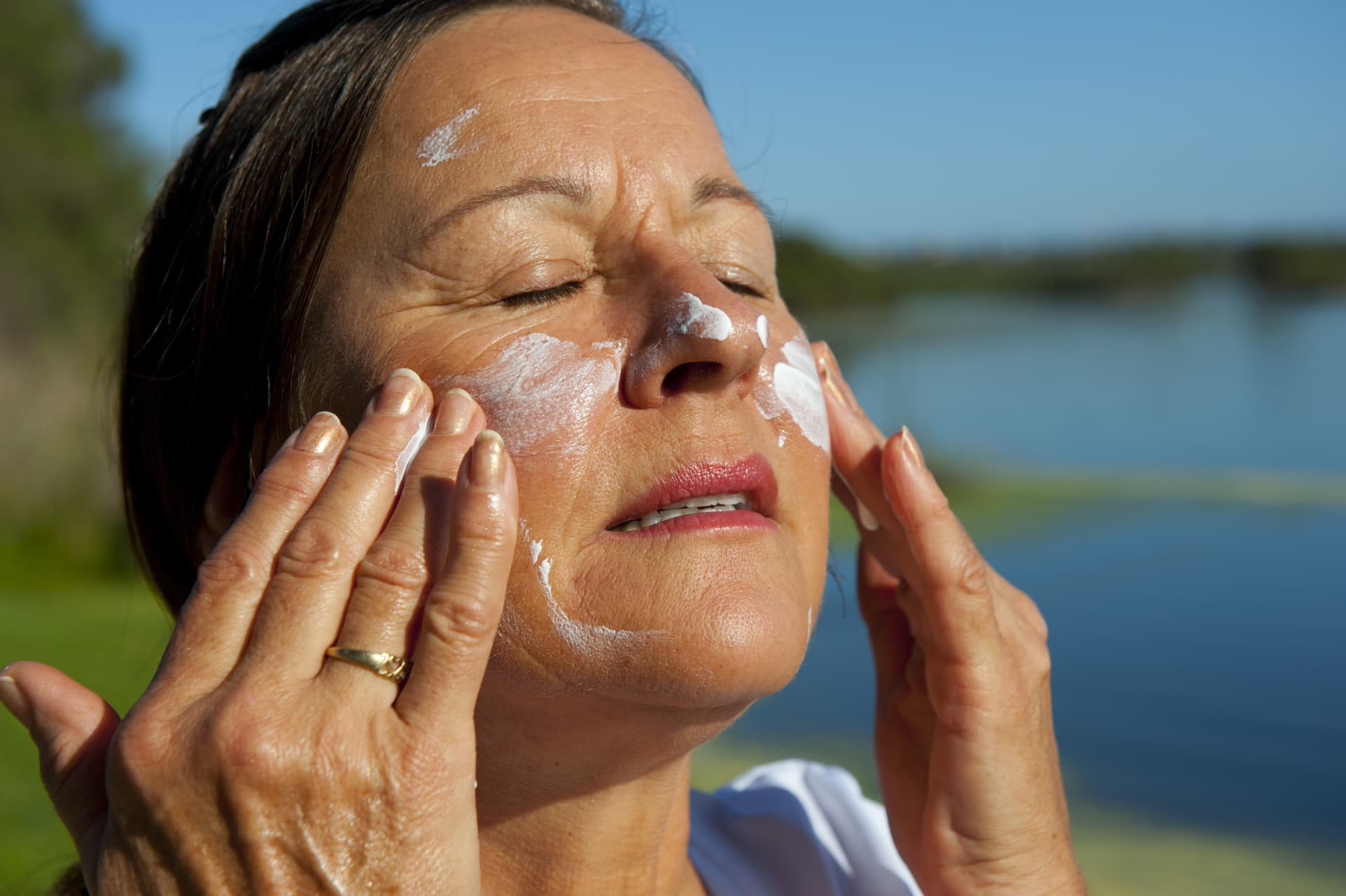
The American Academy of Dermatology recommends broad-spectrum SPF 30 or greater. Apply generously and reapply every two hours, or more often when swimming or perspiring.
Protect your eyes
Choose sunglasses with a high UV protection rating. Darker lenses are not necessarily better. Close-fitting, wraparound frames help block sunlight from different angles.
Skip the base tan
Indoor tanning is not proven to protect against sunburn. A base tan cannot replace sunscreen, shade or protective clothing.
Not sure where to start? Start with a visit.
Soothe discomfort. Understand the limits.
Sunburn treatment does not heal the skin or prevent damage, but it can reduce pain, swelling and discomfort. If at-home care does not help or your sunburn is very severe, your doctor can prescribe medication.
Over-the-counter and prescription pain relievers may help control pain and swelling, especially soon after sun exposure. Your doctor may recommend ibuprofen or naproxen. Some pain relievers are applied to the skin as gels.
Topical corticosteroids may help control itching as the skin heals and are sometimes combined with pain relievers. Ask your doctor which treatment is appropriate for you.
Know your risks. Plan your protection.
Skin & environment
- Fair skin or a history of sunburn.
- Living or vacationing in a sunny, warm or high-altitude place.
- Working outdoors.
- Mixing outdoor recreation with drinking alcohol.
What raises your risk
- Unprotected skin exposed to sunlight.
- UV exposure from tanning beds or other artificial sources.
- Photosensitizing medications that make sunburn more likely.
- Reflected sunlight around water, snow, ice and sand.
Use protection wisely
- Sunscreen can be used on babies and toddlers age six months or older.
- For younger babies, use shade and clothing instead.
- Apply sunscreen before insect repellent.
- The CDC does not recommend combined insect-repellent and sunscreen products.
Broad-spectrum sunscreen protects against ultraviolet rays. While SPF 15 or greater is a minimum, the American Academy of Dermatology recommends SPF 30 or greater. Apply generously and reapply regularly.
Answers are one call or one visit away.
Prevention is the first step.
Sunscreen should be used frequently and generously, regardless of skin type. Reapplication, clothing, shade and eye protection all belong in your sun-safety routine.
If sunburn is very severe or at-home care does not help, speak with a doctor about treatment for pain, swelling and itching.
Medical Dermatology
Board-certified dermatologists treating the full range of skin, hair and nail conditions across seven Hampton Roads locations.
View all medical servicesSchedule with the practice Hampton Roads has trusted since 1946.
For questions about sun protection or skin concerns after sun exposure, call (757) 622-6315 or schedule an appointment with one of our medical providers.
Wherever you are in Hampton Roads, we're close.
From Norfolk to Williamsburg, seven offices, each staffed with board-certified dermatologists and supported by an in-house dermatopathology lab.
Schedule with the practice generations of Hampton Roads families have trusted since 1946.
Book online in under a minute, or call the office nearest you. New patients welcome.