Warts, treated with
a plan that fits.
Warts are noncancerous skin growths caused by a virus. When they hurt, spread or won't go away, a dermatologist can help you choose a treatment.
A common growth, caused by a virus.
Warts are benign (not cancerous) skin growths that appear when a virus infects the top layer of the skin. The viruses that cause warts are called human papillomavirus (HPV). You are more likely to get one of these viruses if you cut or damage your skin.
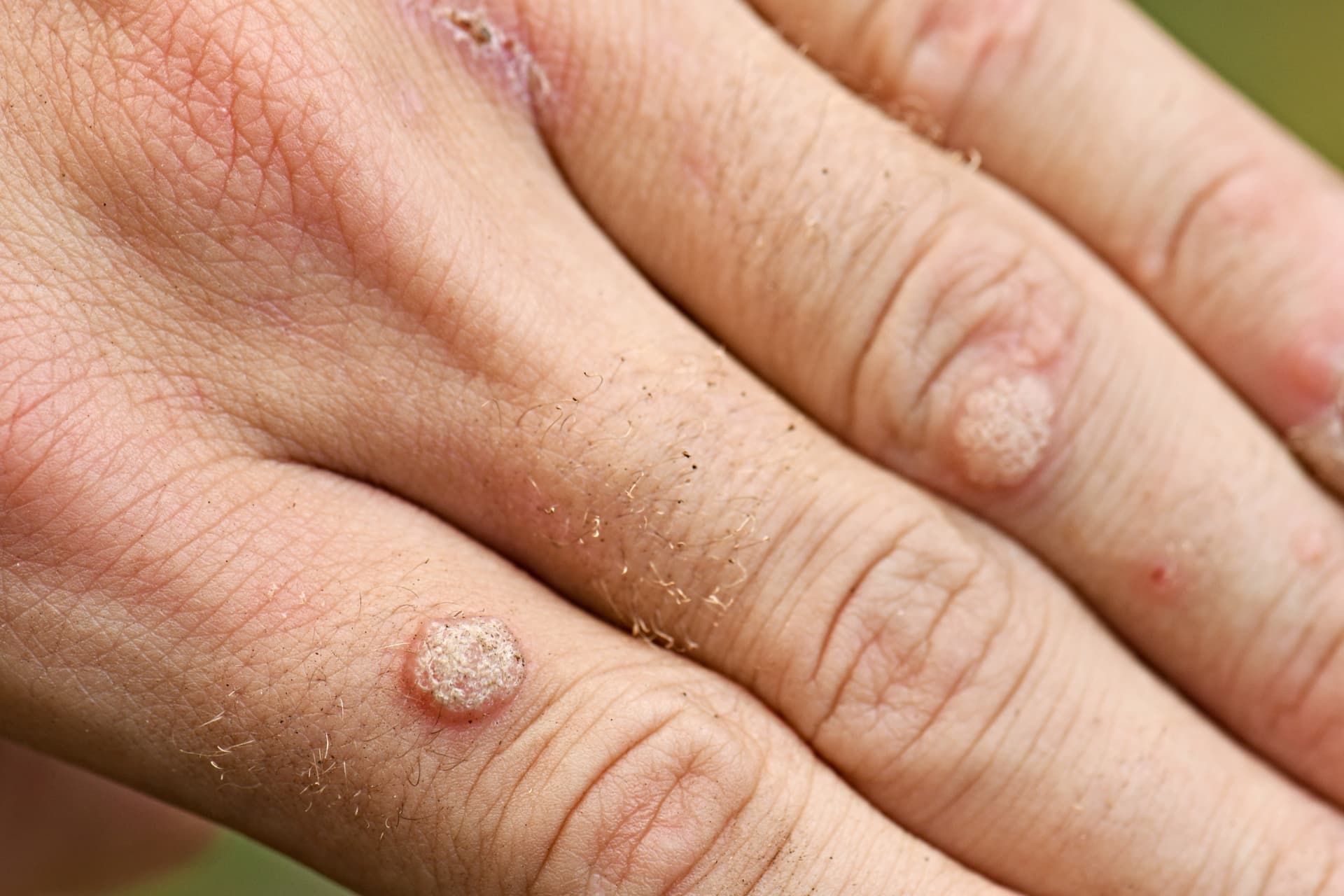
Wart viruses are contagious. Warts can spread by contact with a wart or something that touched it, and can grow on any part of your body. They are often skin-colored and rough, but can also be dark brown or gray-black, flat and smooth.
Warts often go away without treatment, especially in children. In adults, they may not disappear as easily or quickly. See a dermatologist if you cannot get rid of your warts, they hurt or you have many of them.
Different warts. Different approaches.
Treatment depends on your age and health, the type of wart and how it has responded to previous care. Your dermatologist may recommend one of these approaches.
Cantharidin
Applied in the office, cantharidin causes a blister beneath the wart. In a week or so, you may return so your dermatologist can clip away the dead wart.
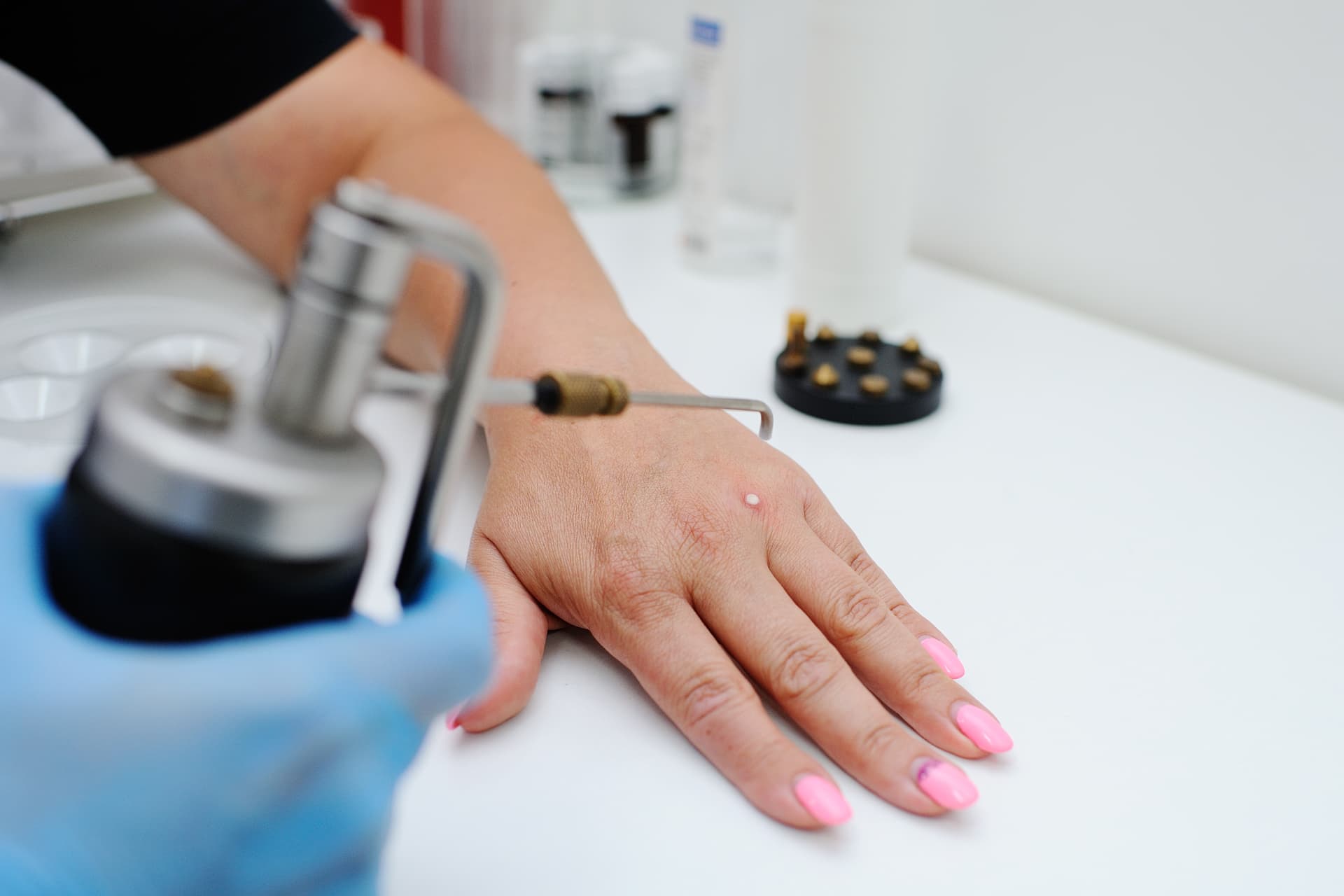
Cryotherapy
Freezing is the most common treatment for common warts in adults and older children. Repeat treatments are common. It can cause dark spots in people with dark skin.
Electrosurgery & curettage
Electrosurgery burns the wart; curettage scrapes it off with a sharp or spoon-shaped tool. Often used together for common, filiform and foot warts.
Excision
Your dermatologist may remove a wart by cutting it out. The choice of treatment depends on the wart and the patient.
Laser treatment
An option mainly for warts that have not responded to other therapies. Your dermatologist may numb the wart with an anesthetic injection before treatment.
Chemical peels
Multiple flat warts may be treated with daily peeling medicine at home. Options include prescription-strength salicylic acid, tretinoin and glycolic acid.
Bleomycin
For hard-to-treat warts, a dermatologist may inject bleomycin into each wart. Injections can hurt and have side effects, including nail loss when used in fingers.
Immunotherapy
For persistent warts, treatment may use the immune system to fight the virus. Diphencyprone (DCP) produces a mild allergic reaction around a wart; another approach uses interferon injections to boost the immune response.
Not sure where to start? Start with a visit.
Start with a closer look.
A dermatologist can usually tell whether a growth is a wart by looking at it. In rare cases, a skin biopsy is needed to be certain.
For a biopsy, the dermatologist removes the wart and sends it to a laboratory, where a small piece is examined under a microscope. A biopsy is a quick procedure performed by a dermatologist.
When to seek care, and what to expect.
Don't ignore discomfort
- Warts that hurt.
- Many warts or new growths.
- Warts you cannot get rid of.
- A growth you are not sure is a wart.
A personal choice
- Your age and health guide treatment.
- The type of wart matters.
- Freezing often requires repeat visits.
- Resistant warts may need another approach.
Watch for new warts
- There is no cure for the wart virus.
- Warts can return in the same place.
- New warts can develop elsewhere.
- Ask your dermatologist about treating new warts promptly.
Answers are one call or one visit away.
Treat the wart. Keep an eye on your skin.
There is no cure for the wart virus, so warts can return at the same site or appear in a new spot. Sometimes new warts appear as fast as old ones go away.
This can happen when existing warts shed virus cells into the skin before treatment, allowing new warts to grow nearby. Have your dermatologist assess and treat new warts as they appear.
Medical Dermatology
Board-certified dermatologists treating the full range of skin, hair and nail conditions across seven Hampton Roads locations.
View all medical servicesSchedule with the practice Hampton Roads has trusted since 1946.
For help with painful, persistent or spreading warts, call (757) 622-6315 or schedule an appointment with one of our medical providers.
Wherever you are in Hampton Roads, we're close.
From Norfolk to Williamsburg, seven offices, each staffed with board-certified dermatologists and supported by an in-house dermatopathology lab.
Schedule with the practice generations of Hampton Roads families have trusted since 1946.
Book online in under a minute, or call the office nearest you. New patients welcome.