
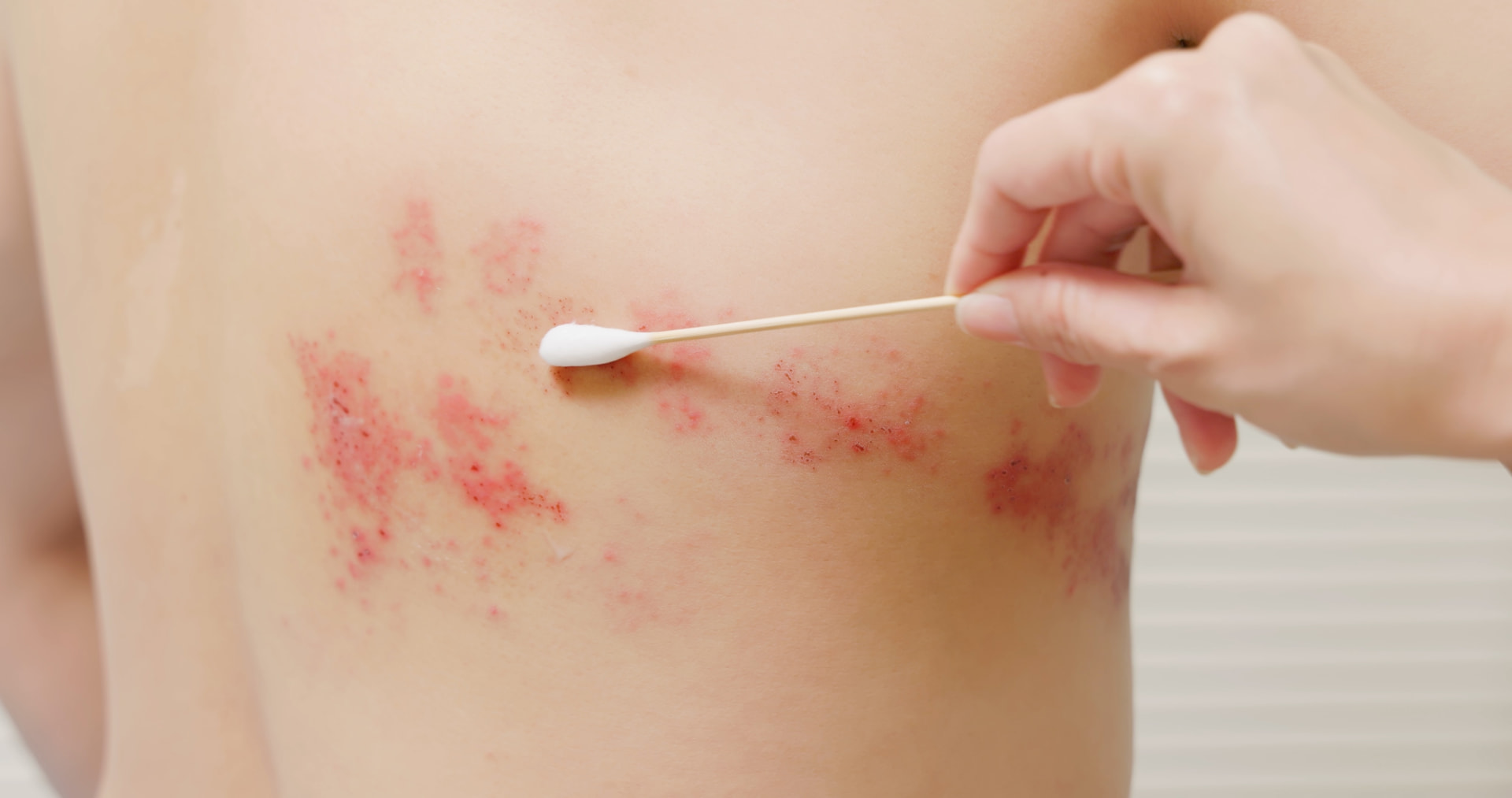
Shingles care.
Early treatment matters.
Shingles is a painful, blistering rash caused by reactivation of the chickenpox virus. Antiviral medicine works best when started within three days of the rash appearing.
A familiar virus, reactivated.
Anyone who has had chickenpox can get shingles. After chickenpox clears, the virus stays in the body. If it reactivates, the result is shingles, also called herpes zoster: a painful, blistering rash.
Shingles is most common in older adults. A vaccine to prevent shingles is available for people ages 50 and older; dermatologists recommend vaccination for everyone in this age group.
If shingles develops, dermatologists recommend treatment. Antiviral medicine can make symptoms milder and shorter and may prevent long-lasting nerve pain. It is most effective when started within three days of seeing the rash.
If you have shingles on your face, see a doctor immediately. Without treatment, shingles can damage an eye.
Recognize the signs. Act early.
Shingles tends to cause more pain and less itching than chickenpox. Symptoms often begin before the rash is visible.
An early warning
A small area on one side of the body may burn, itch, tingle or feel very sensitive. Symptoms may come and go or remain constant, usually for one to three days or longer.
A rash
A rash appears in the same area where the burning, tingling or sensitivity began.
Blisters
The rash becomes groups of clear blisters that turn yellow or bloody, then crust over and heal. Blisters tend to last two to three weeks.
Pain
Blisters without pain are uncommon. Pain may require prescription medicine and usually lessens as the blisters heal, but can continue for months afterward.
Flu-like symptoms
A fever or headache may occur along with the rash.
Face or eye involvement
Shingles can involve the eye. A facial rash, blisters around the eye or on the tip of the nose need immediate medical attention.
Not sure where to start? Start with a visit.
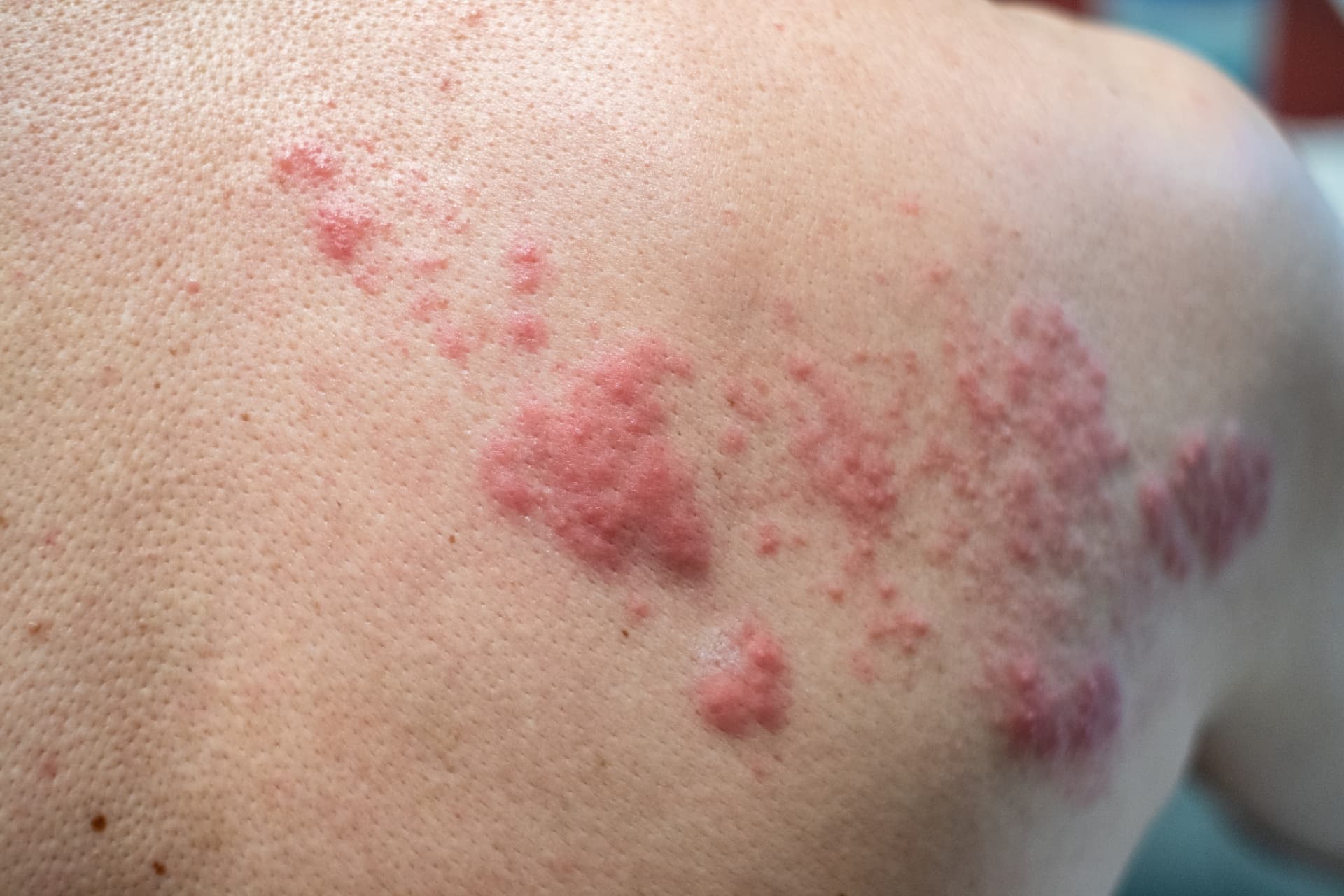
Prompt care for the rash and the pain.
A dermatologist diagnoses shingles by examining your skin and asking questions. If there is doubt, a blister may be scraped for a sample to examine under a microscope, or fluid may be sent to a laboratory for testing.
Antiviral medicines include famciclovir, valacyclovir and acyclovir. They may be prescribed when shingles is diagnosed within 72 hours of the rash first appearing. The earlier treatment begins, the better it works; these medicines can lessen pain and how long it lasts.
Pain relievers, including prescription medicines, may be needed. For intense pain, nerve-block injections contain a numbing anesthetic and sometimes a corticosteroid. Some patients may receive corticosteroid pills with antiviral medicine, but this is uncommon because it can make the rash spread.
After the rash clears, certain antidepressants, pain relievers, anesthetic creams and patches, and antiseizure medicines can help with continuing pain. Ask your dermatologist about possible side effects.
Know when shingles needs closer attention.
Postherpetic neuralgia
- The most common complication: pain, numbness, itching or tingling lasting months or years.
- People over age 60 are most likely to be affected.
- Fatigue, low appetite and trouble sleeping can occur.
- Even a light touch may cause intense pain.
See a doctor immediately
- Blisters around the eye, on the eyelid or on the tip of the nose.
- Eye swelling, redness, pain or sensitivity to light.
- Blurred vision or a feeling that something is in the eye.
- Untreated eye involvement can cause glaucoma, scarring or blindness.
Watch healing closely
- Blisters can become infected and heal more slowly.
- Lasting pain and redness can warn of bacterial infection.
- Your dermatologist may prescribe antibiotics.
- Without prompt treatment, infection may cause scars.
Shingles involving the eye is called ocular shingles or herpes zoster ophthalmicus. People with eye involvement may also have a higher risk of stroke. Seek immediate medical care for facial or eye symptoms.
Answers are one call or one visit away.
The rash may clear. Pain can last longer.
Without treatment, the rash usually clears in a few weeks. Dermatologists strongly recommend treatment because pain, numbness, itching and tingling can otherwise continue for months or years.
Patients rarely need a hospital stay, but nerve pain, eye problems and bacterial infection can be serious. Early assessment and treatment are important.
Medical Dermatology
Board-certified dermatologists treating the full range of skin, hair and nail conditions across seven Hampton Roads locations.
View all medical servicesSchedule with the practice Hampton Roads has trusted since 1946.
If you think you have shingles, call (757) 622-6315 promptly. For shingles on the face or near the eye, see a doctor immediately rather than waiting for a routine appointment.
Wherever you are in Hampton Roads, we're close.
From Norfolk to Williamsburg, seven offices, each staffed with board-certified dermatologists and supported by an in-house dermatopathology lab.
Schedule with the practice generations of Hampton Roads families have trusted since 1946.
Book online in under a minute, or call the office nearest you. New patients welcome.